Deutsch
 English

Every year, when a new version of Ashampoo Burning Studio is released, I get asked the same questions over and over again. Usually with a slightly mocking undertone and raised eyebrows, people express their disbelief that anyone still deals with burners and blank discs. But there is a world beyond cloud storage and USB sticks!
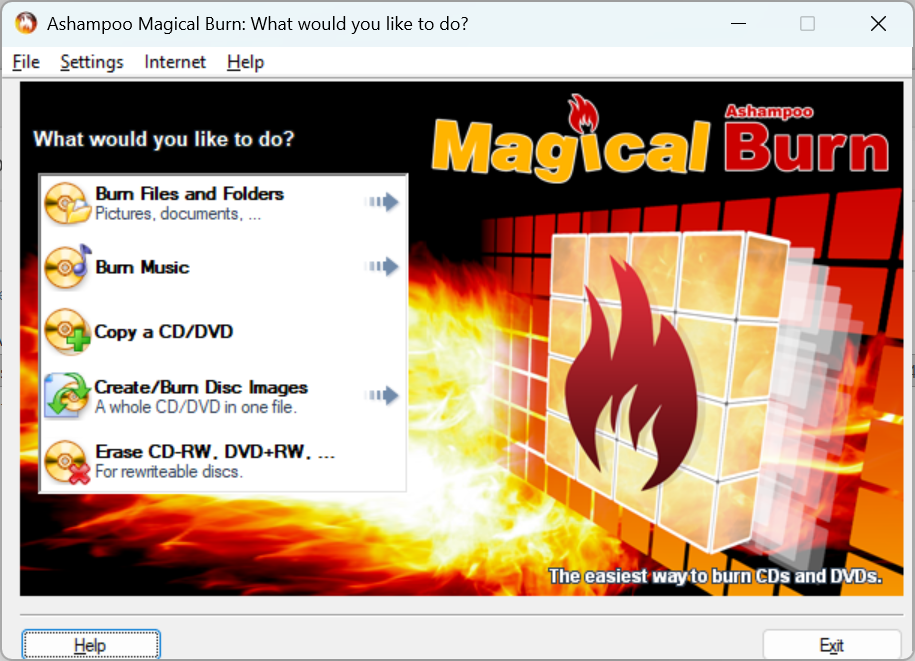
Since the Burning Studio team sits on the same floor as I do, I also get to see that this program is still very much alive – both among the developers and among our customers. And when a Windows update is released that negatively affects the program, I sometimes hear about it quite loudly. Customer requests and new hardware are discussed as well, and tricky test cases are passed on to our quality assurance team. And if you think nobody seriously wants to split their truly gigantic, complete photo collection across countless blank discs – think again. The world is a big place, and customers are diverse. Among testers, we repeatedly saw someone confidently declare, “Nobody does that!”, only for support to receive a customer complaint shortly afterwards about exactly that use case. Since then, we have stopped making predictions altogether. And sometimes there is something bigger behind a request: If a customer gets in touch because there is a problem burning an audiobook they recorded for their grandchild, then there is certainly a technical side to it – but also a deeply human one.
When I joined Ashampoo in 2007, Burning Studio was the company’s most important product. Of course, WinOptimizer already existed, along with other titles that sold well, but Burning Studio was the program we had grown up with. It was part of the company’s DNA. And so, from day one as a tester, I sat surrounded by drives and stacks of blank discs and spent some days burning almost nonstop. Whether it was the classic mix CD, a DVD full of family photos, or entire movies on Blu-ray, everything had to be tested. Sometimes I would lie in bed at night and still hear the whirring and rushing sounds of the drives. We were always competing with our colleagues at Nero Burning ROM and tried to outdo each other year after year. Whenever a new version came out, we would look at what the competition had done and sometimes get annoyed that we had not thought of it ourselves. Or we would later spot one of our own features in a competing product and feel quietly vindicated. There were always technical innovations too: some DVD drives ran at 20x speed, burned surprisingly fast, and sounded like tiny helicopters while doing so. Then one day, a product manager stood in the office with shining eyes and told us about M-DISC, a new optical storage medium that was supposed to preserve data for an entire millennium. It was not just innovative, he said, but the next really big thing that we absolutely had to support! He could barely contain himself. We did support it – but it still remained a niche, which was a shame. And who still remembers LightScribe, which let you use a laser to print text and graphics onto the specially coated surface of CDs and DVDs? True works of art were created in the Ashampoo test department back then!
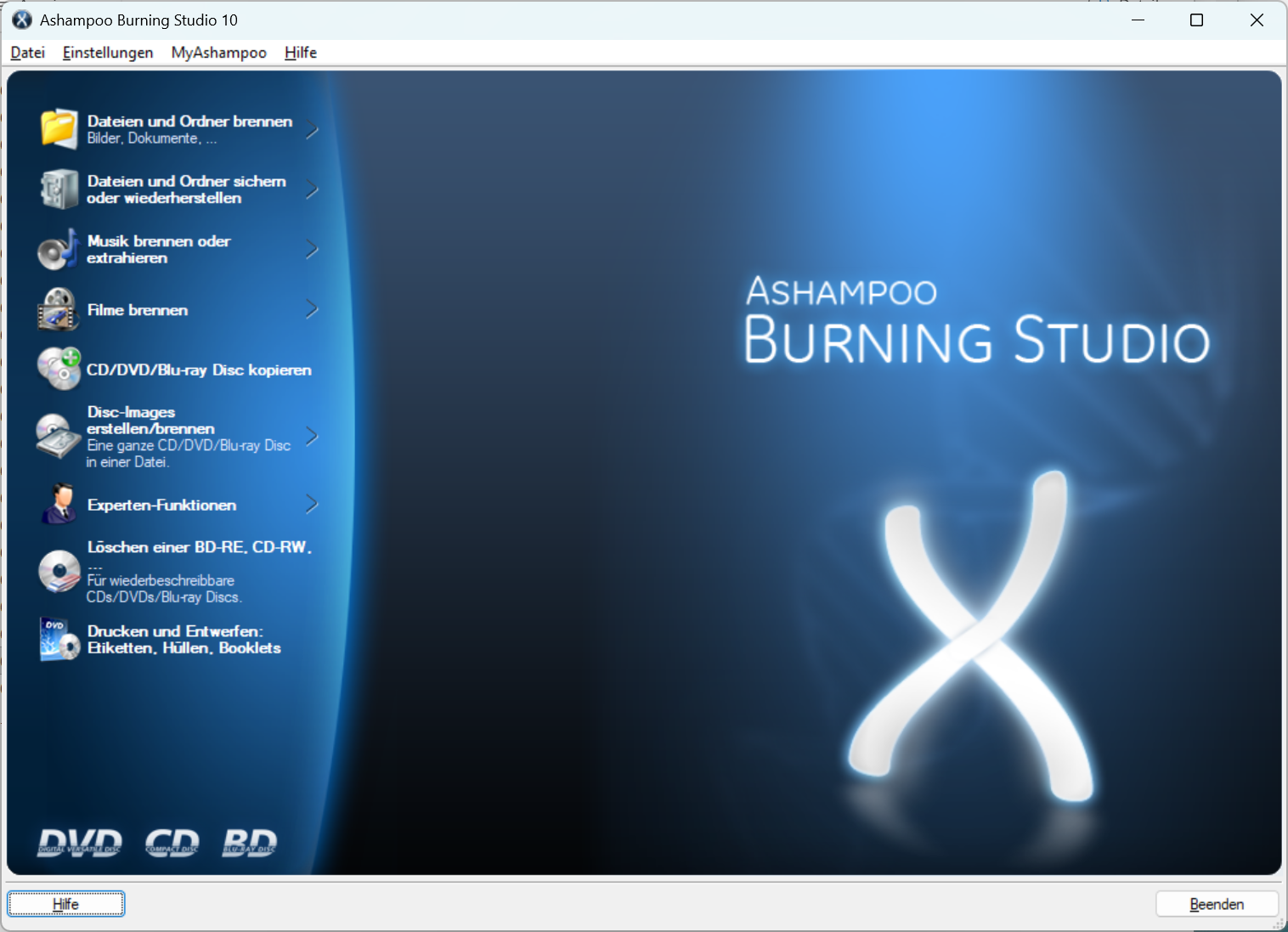 A Touch of The X-Files – Ashampoo Burning Studio 10
You may have noticed from all the past tense that much of this is no longer current. Technological change, with USB drives and cloud storage, has long since pushed disc burning into a niche. And so I am still asked again and again who actually burns discs these days. The answer: surprisingly many people! Owners of older cars still lovingly put together mix CDs, choirs burn recordings of their performances and hand them out, and photographers provide customers with their pictures on disc. Things often move differently in business environments anyway. Older machines, diagnostic equipment, CNC systems, or specialized computers may still rely on CD/DVD as an installation or transfer medium, and physical backups on optical discs are still part of everyday life in many places. Recordings of family celebrations, weddings, and club events often survive longer on a disc than as a link or download that was sent around once. Some people still receive sensitive data, such as radiology reports, on disc. Smaller bands also continue to burn demo CDs, limited editions, and live recordings onto CD-Rs in proper style instead of relying on QR codes. There is still something appealing about putting a physical album into a player, looking at the cover, and reading along with the lyrics. So while disc burning may have largely disappeared from the news and from many people’s everyday lives, there is still quite a lot of burning going on!
Putting a self-compiled CD or DVD into a player – perhaps even one lovingly finished with its own cover – simply feels different from starting a Spotify playlist. Do I want to go back to the days when people carried large folders full of burned MP3 CDs around in their cars? No. Would I like to revisit old memories by playing a burned mix from my university days? Absolutely! And while I am talking about old times: CDs do not last forever either, of course. How long they remain readable depends heavily on quality, materials, and storage conditions. Pressed CDs can survive for many decades, while some CD-Rs may fail much sooner. Strangely enough, I have never personally experienced that. One of my oldest CDs, Pink Floyd’s “Meddle” as a Japanese import, still plays exactly as it did on day one and looks immaculate. Even cheap burned discs of mine that survived some rough moves over the years have only ever failed because of scratches, not because of age-related degradation of the disc itself.
And so, every year when Burning Studio is released, I will patiently answer the same questions once again: Yes, we still burn discs. People still burn discs. All over the world!